Black Sunday (1960): Mario Bava, Barbara Steele and the Mask That Started It All
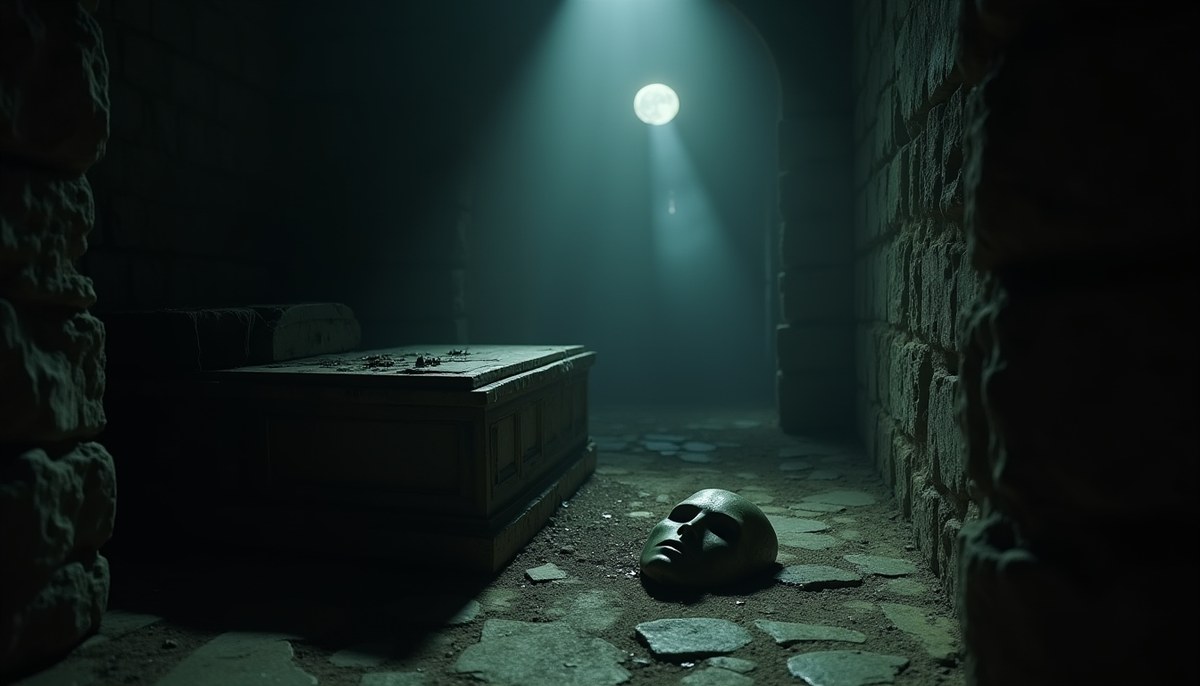
Few horror films open with a scene as savage as Black Sunday. In seventeenth-century Moldavia, a witch named Asa is branded and condemned by her own brother. A bronze mask lined with spikes is placed over her face, and a hooded executioner drives it home with a mallet. Before she dies, she curses the family line. Two centuries later, a pair of travelling doctors stumble into her crypt, and a drop of blood is all it takes.
Bava Steps Out From Behind the Camera
Mario Bava had spent years as one of Italy’s most gifted cinematographers, and more than once he quietly finished films that other directors had abandoned. La maschera del demonio, released in 1960, was the first feature he directed under his own name, and he shot it himself. It shows. Every frame is composed like an engraving: deep blacks, silver highlights, fog crawling across graveyards, and camera moves that glide through crypts and corridors as if the camera itself were a ghost.
The story is loosely drawn from Nikolai Gogol’s tale “Viy,” though very loosely. What Bava kept was the atmosphere of a folk curse, a remote estate, and an evil that waits patiently in the ground.
Barbara Steele, Twice
British actress Barbara Steele plays two roles: Asa, the vengeful witch, and Katia, her innocent descendant, who lives in the castle above the crypt. It’s a perfect piece of casting. Steele had enormous eyes and a face that could look angelic in one shot and predatory in the next, and Bava lit her to exploit both. As Asa slowly regenerates in her tomb, her ruined face is one of the most unsettling images of the era. As Katia, she’s fragile and haunted. The film became the foundation of Steele’s reputation, and she went on to become the defining face of sixties Italian gothic horror.
The Images That Stuck
What people remember about Black Sunday are its images. The mask being hammered on. Scorpions crawling from a corpse’s empty eye sockets. A ghostly carriage moving in slow motion through a misty forest. Asa’s eyes reforming inside her face. The effects are practical and often simple, but Bava understood exactly how much to show and for how long. Many of these moments feel more modern than the rest of the film around them, and they still turn up in horror montages more than six decades later.
The violence was strong for 1960. The film was refused a certificate in Britain and wasn’t passed there until 1968, which only made its reputation grow among those who managed to see it.
The American Version
American International Pictures picked up the film and released it in the States as Black Sunday, trimming some of the gore, re-dubbing the dialogue and replacing the original score with a new one by Les Baxter. It was a hit for AIP and helped convince the studio that gothic horror had a future, a lesson it would soon apply to its own Poe pictures with Vincent Price. If you can find the Italian cut, it’s worth seeing for Roberto Nicolosi’s original music, but the AIP version is the one many Americans grew up with on late-night television, and it has its own charm.
Where It Sits in Horror History
Black Sunday arrived at the same moment as Hammer’s colour Draculas and Frankensteins, and it chose black and white deliberately. Bava made the monochrome do things colour couldn’t. Within a few years, he would invent the giallo with The Girl Who Knew Too Much and Blood and Black Lace, and his fingerprints are all over Dario Argento’s work and generations of gothic horror that followed. Tim Burton has long cited Bava’s gothic films as an influence, and you can see it in Sleepy Hollow. But it all starts here, with a mask and a curse.
Gothic Romance at the Core
Underneath the horror, Black Sunday is a doomed romance. John Richardson plays Dr. Andrej Gorobec, the young physician who falls for Katia almost the moment he sees her at the ruined chapel, and their courtship gives the film a fairy-tale shape: the cursed castle, the grieving father, the princess in danger and the hero racing against an ancient evil. Bava plays it completely straight, with no winks to the audience, and that sincerity is part of why it still works. The characters believe in the curse, so we do too.
It also gives Steele’s double role its real power. Katia and Asa share a face, and the climax turns on whether Gorobec, and the audience, can tell them apart. It’s a simple device, but Bava stages it with real tension, and it’s the moment where the film’s gothic romance and its nightmare imagery finally become the same thing.
Why It Endures
Some old horror films are historical curiosities. Black Sunday is still genuinely eerie. The plotting is classical, with its doomed lovers, its loyal servant and its brave young doctor, but the imagery is pure nightmare logic, and Steele’s double performance gives it a strange, sad heart. It’s a film about the past refusing to stay buried, and few films have ever made the past look so beautiful or so dangerous.
It was a staple of the late-night monster-movie slot for years, which makes it a natural for us here at Midnight Macabre. Watch it with the lights off, in black and white, as Bava intended. And if you ever find a bronze mask in an old crypt, leave it face-down.