Obsession (1976): Brian De Palma’s Vertigo Dream, Scored by Bernard Herrmann
Brian De Palma has never hidden his love for Alfred Hitchcock, but in Obsession the devotion becomes something closer to a séance. Released in the summer of 1976, it is De Palma’s most open tribute to Vertigo, a haunted, gauzy love story about a man trying to bring back the dead. It is also one of his most underrated films, and it comes with a gift from beyond the grave: a soaring score by Bernard Herrmann, Hitchcock’s greatest composer, who died just before the film was released.
New Orleans, 1959
The story begins at an anniversary party in New Orleans. Michael Courtland, a wealthy property developer played by Cliff Robertson, is celebrating ten years of marriage to his wife Elizabeth, played by Geneviève Bujold. That night Elizabeth and their young daughter are kidnapped. The police plan a rescue, the plan goes wrong, and Michael loses both of them.
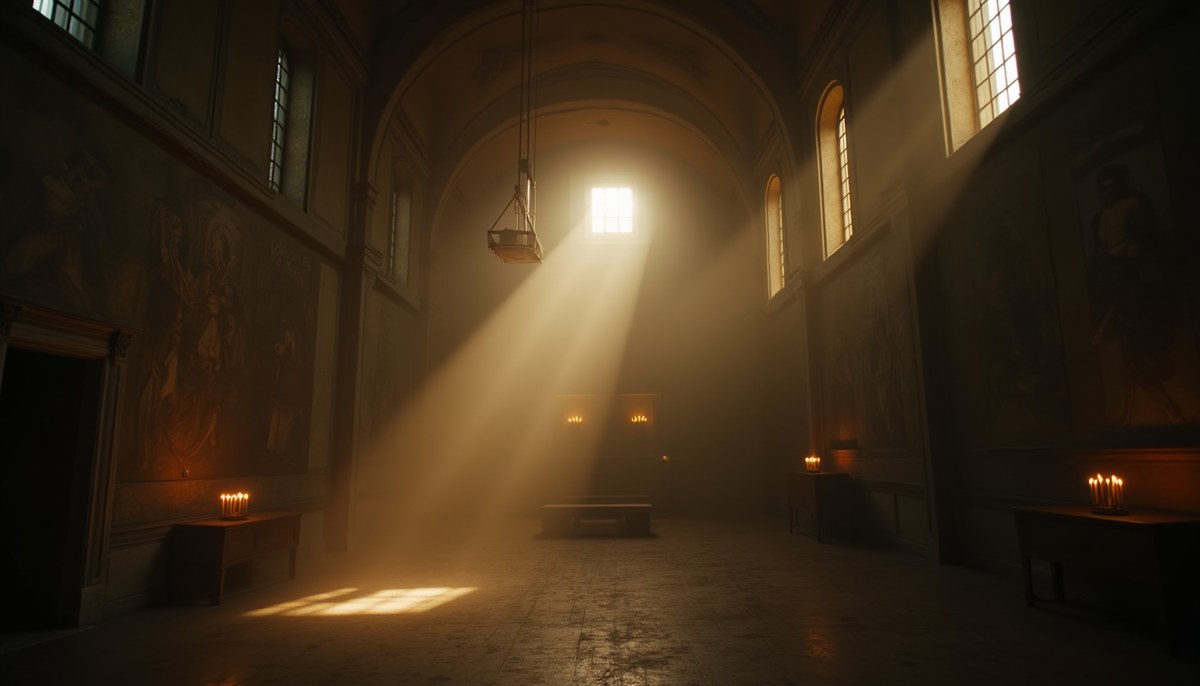
He never moves on. He builds a memorial to his wife on land he refuses to develop, and lives in a kind of suspended grief. Then, years later, on a business trip to Florence with his partner Robert, played by a sly John Lithgow, he wanders into the church where he first met Elizabeth and sees a young woman restoring a fresco. Her name is Sandra. She looks exactly like his dead wife.
Schrader, De Palma and Vertigo
The screenplay was written by Paul Schrader, who wrote Taxi Driver the same year. Schrader and De Palma built the story directly on Vertigo‘s bones: the grieving man, the double, the attempt to remake a living woman into the image of a dead one. But Obsession is not a remake. It takes Hitchcock’s themes in its own direction, toward fairy tale and something stranger and more uncomfortable, and its final turns are its own.
Bujold is wonderful in a demanding double role, playing both the warm wife of the prologue and the more elusive Sandra, a woman who seems to be quietly studying the part she is being asked to play. Robertson brings a stiff, wounded dignity to Michael, a man so frozen by grief that he barely seems alive.
The Look of a Dream
The cinematographer was Vilmos Zsigmond, who would soon shoot Close Encounters of the Third Kind, and he gives Obsession a soft, hazy glow that makes the whole film feel like a memory. Florence is all honeyed light and drifting candle smoke. The flashbacks and the present blur together until we are as unsure as Michael about what is real.
De Palma adds his signature camera moves: long circling shots that spin around the lovers, and slow, swooning sequences where time seems to bend. One shot circles slowly around Michael and, without a cut, carries the story across the years, as if grief has simply stopped the clock. It is the De Palma style at its most romantic, before the splashier violence of Carrie and Dressed to Kill.
Herrmann’s Last Great Score
De Palma had worked with Bernard Herrmann on Sisters, and for Obsession the composer delivered something extraordinary: a huge, aching score of organ, choir and orchestra that sounds like a requiem and a love theme at the same time. It is the engine of the film. Long stretches play almost like an opera, with the music carrying the emotion that the characters cannot say.
Herrmann died in December 1975, before Obsession reached cinemas, and the score earned him a posthumous Academy Award nomination. If you love the music of Vertigo, this is its spiritual sequel, and many fans rank it among the finest film scores of the decade.
A Film Out of Time
In 1976, Obsession felt almost defiantly old-fashioned. This was the decade of gritty, cynical American cinema, and here was a lush, sincere melodrama with a full orchestra and a doomed romance at its heart. That is part of what makes it so interesting now. De Palma was still finding his voice, and you can see him reaching for something grander and more emotional than the playful shocks of his earlier work. A few months later he would release Carrie and become a household name, but Obsession shows a gentler, more melancholy side of him that would surface again in Blow Out.
The Verdict
Obsession is a slow, sincere, beautifully strange film that asks you to give yourself over to its mood. It has a few rough patches and a plot that requires some patience, but its atmosphere is intoxicating and its ending lingers. It is the perfect companion piece to De Palma’s more famous thrillers, and the essential next step for anyone who has ever watched Vertigo and wanted more.
Put it on late, let Herrmann’s choir wash over you, and remember that in a De Palma film, nobody you love is ever quite who they seem.