Bram Stoker at 179: The Theatre Manager Who Gave Us Dracula
On November 8, 1847, in the Dublin seaside suburb of Clontarf, a sickly baby named Abraham Stoker was born. For the first years of his life he barely left his bed, and his mother filled the long hours with stories: Irish legends, banshees, and the cholera epidemic she had lived through as a girl, when the dead were carted away and, the story went, not always quite dead. Nobody in that sickroom could have guessed that the boy would grow up to write the most famous horror novel ever published. Today, on what would be his 179th birthday, we raise a glass of something red to Bram Stoker.
The Civil Servant Who Loved the Stage
The invalid child recovered completely and became, of all things, an athlete at Trinity College Dublin. After university he took a steady job as a civil servant at Dublin Castle, the kind of desk work that does not usually produce immortal monsters. His real passion was the theatre. Stoker wrote unpaid reviews for a Dublin newspaper, and one of them, a glowing notice of the actor Henry Irving’s Hamlet, changed his life. Irving sought out the young critic, the two became fast friends, and in 1878 Stoker moved to London to manage Irving’s Lyceum Theatre.
That same year he married Florence Balcombe, a celebrated Dublin beauty who had once been courted by a young Oscar Wilde. The Stokers settled into London’s artistic world, where Bram spent the next quarter century handling Irving’s business, his tours, his correspondence and his considerable ego.
Writing in the Margins
Stoker wrote fiction in whatever time the Lyceum left him: short stories, adventure novels, a guidebook for Irish civil servants. None of it suggested what was coming. For several years in the 1890s he filled notebooks with research for a vampire story, reading up on Eastern European folklore and the history of Transylvania. A holiday in the Yorkshire fishing town of Whitby in 1890 gave him the ruined abbey on the cliff, the churchyard above the harbour, and, in the town library, the name of a fifteenth-century Wallachian prince called Dracula.
Dracula was published in May 1897. It is told entirely in letters, diary entries, newspaper clippings and phonograph recordings, a jigsaw of documents that the reader assembles alongside the characters. That structure is a big part of why it still works. We never get the Count’s point of view. We only get the people trying to understand him, always one step behind.
A Modest Hit, Then a Long Afterlife
The novel sold respectably and earned good reviews, but it did not make Stoker rich. When Henry Irving died in 1905, Stoker lost his job and his anchor, and his later years were marked by money troubles and failing health. He kept writing, including the strange The Jewel of Seven Stars and The Lair of the White Worm, and he died in London on April 20, 1912, with no idea how famous his vampire was about to become.
The Count’s real career began after his creator was gone. In 1922 F. W. Murnau made Nosferatu in Germany without permission, renaming the vampire Count Orlok. Florence Stoker, who depended on the book’s income, sued and won, and a court ordered the prints destroyed. Happily for us, some survived. A stage adaptation toured Britain and then Broadway, and its American star, a Hungarian actor named Bela Lugosi, carried the role into Universal’s 1931 film. After that, Dracula belonged to everyone.
Why the Count Endures
Plenty of Victorian thrillers are forgotten now. Dracula survives because Stoker tapped into fears that never went out of style: the foreigner who arrives quietly and buys property next door, the infection that spreads through the people you love, the respectable man of science who has to admit that the old superstitions were right. Every generation finds its own anxieties in the book, and every generation gets its own Dracula to match, from Lugosi’s cape to Christopher Lee’s red eyes at Hammer to the dozens of versions since.
Stoker also gave the genre its playbook. The doubting hero, the expert who knows the old ways, the slow gathering of evidence, the race against sunset: you can find all of it in nearly every vampire story that followed, and in a good many horror stories that have nothing to do with vampires at all.
How to Celebrate
The best tribute is the book itself. If you have only ever seen the movies, read Dracula the way it was meant to be read, at night, one diary entry at a time. Then pull out a double feature: Lugosi’s 1931 film for the elegance and the silence, and Hammer’s Horror of Dracula for the blood and the speed.
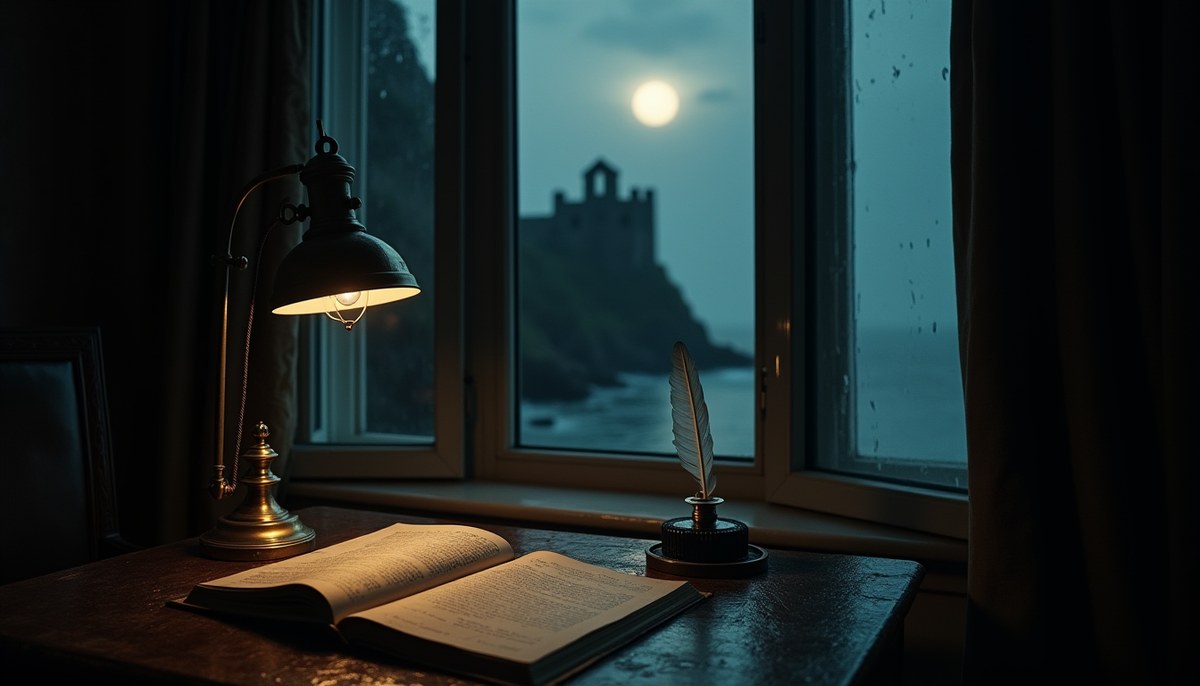
Here at Midnight Macabre, the Count is never far from the schedule. So happy 179th, Mr. Stoker. Thanks for the nightmares. We are still reading by lamplight, and we still check the window before we go to sleep.