Split Diopters, Split Screens and Slow Motion: Brian De Palma’s Visual Toolkit
You can recognise a Brian De Palma film from a single still. Two faces sharp at once, one huge in the foreground and one small in the distance. A screen divided down the middle. A camera that glides through a room like it’s following someone. De Palma has always made films about watching, and he makes sure you know you’re watching too. Here’s a guide to the tools in his kit.
The Split Diopter
A split diopter is a half-lens fitted over the camera’s main lens, so one side of the frame focuses close and the other focuses far. The result is something the human eye can’t do: a face inches from the camera and a figure across the room, both perfectly sharp. De Palma uses it again and again, in Carrie, Dressed to Kill, Blow Out and more. It’s the visual equivalent of a character who doesn’t know what’s happening behind them, while we do.
The Split Screen
Where the diopter puts two planes in one frame, the split screen puts two whole scenes side by side. In Sisters (1972) De Palma shows a murder from one angle while the neighbour who witnessed it calls the police in the other half of the screen. In Carrie, the prom finale divides the screen as Carrie’s power is unleashed. It turns the audience into a security guard watching two monitors, and it makes suspense almost unbearable.
Slow Motion as Opera
De Palma stretches his biggest moments into slow motion, often with music swelling over the top. The bucket at the prom in Carrie, the fireworks finale of Blow Out, the stairs in The Untouchables: time slows down so you can feel the dread before the impact. It’s unashamedly operatic, which is exactly the point.
The Long, Gliding Take
De Palma loves a camera that keeps moving without a cut, following characters through corridors, crowds and lobbies. The famous museum sequence in Dressed to Kill, nearly wordless, follows a woman through gallery after gallery as a flirtation turns into a chase. Later films like Snake Eyes open with long, unbroken takes that show off the technique for minutes at a time.
The Voyeur’s Point of View
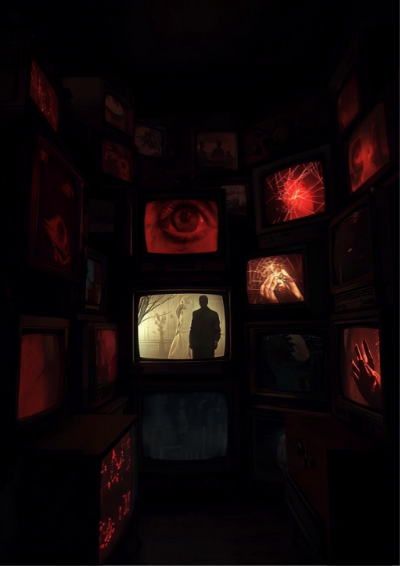
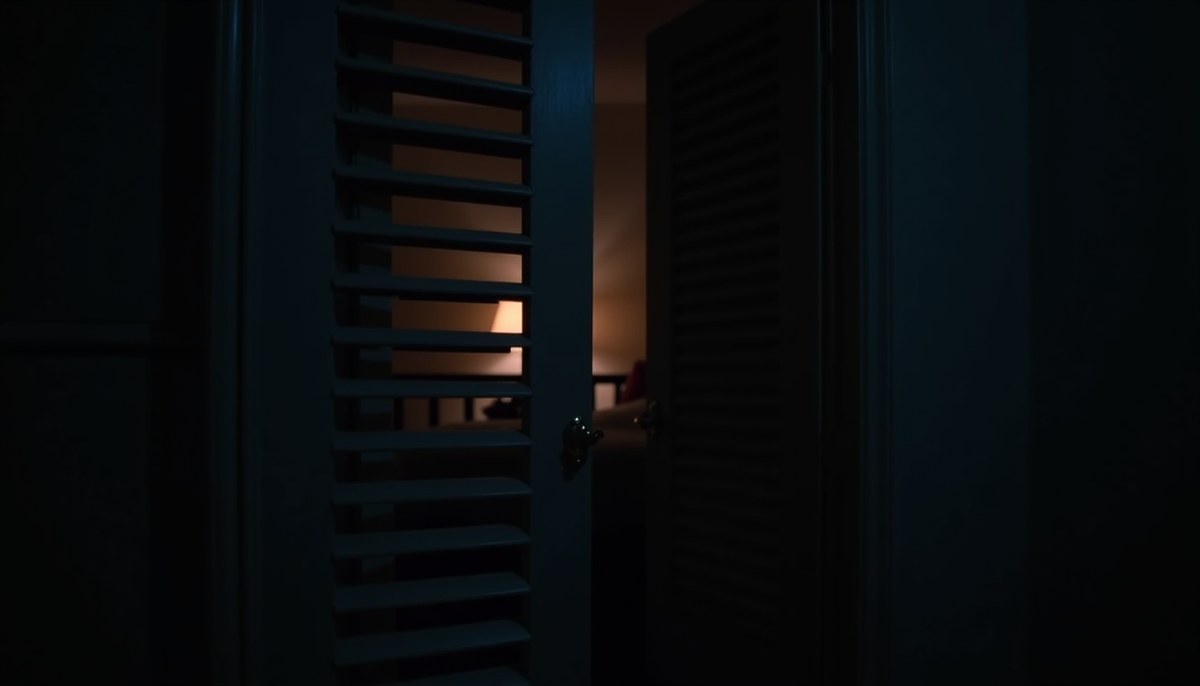
Peepholes, telescopes, binoculars, louvered doors, surveillance cameras. De Palma’s characters are always watching each other, and his camera often sees through their eyes. Body Double is built entirely around a man watching a woman through a telescope. It’s no coincidence that his biggest influence is Hitchcock, whose Rear Window made voyeurism a genre all its own.
Pino Donaggio’s Music
The sound of De Palma’s thrillers belongs largely to Pino Donaggio, who scored Carrie, Dressed to Kill, Blow Out and Body Double after De Palma heard his work on Don’t Look Now. Lush, romantic and sinister in the same breath, Donaggio’s scores make the slow motion soar.
It’s worth noting that De Palma’s style has always divided critics. Some see it as dazzling filmmaking, others as showing off, and a few as a pale imitation of Hitchcock. The truth is that De Palma uses Hitchcock the way a jazz musician uses a standard: the melody is borrowed, but the improvisation is his. Obsession riffs on Vertigo, Dressed to Kill on Psycho, Body Double on Rear Window, and each one bends the original into something stranger.
His techniques also work because they’re tied to character. The split diopter shows a person who doesn’t notice the danger behind them. The split screen shows two people who can’t reach each other in time. The slow motion shows a moment someone will replay for the rest of their life. The camera is never just decorating the scene. It’s telling you what’s at stake.
If you want to see the whole toolkit in one place, Blow Out (1981) is the place to start. It has the diopter shots, the long takes, a famous 360-degree camera move and slow motion, all in service of a story about a man obsessed with recording the truth.
One more trademark deserves mention: the dream that isn’t a dream. De Palma loves to end a film with a final scare that turns out to be a nightmare, as in Carrie and Dressed to Kill, jolting the audience just when it thought the story was over. It’s a cheeky move, but it’s also a reminder that his films are about the mind as much as the eye, about images that won’t stop replaying long after the lights come up.
Why It Matters to Us
De Palma’s toolkit is the reason his films still look modern. Every technique asks the same question: who is watching, and what can they see? It’s also a big reason Midnight Macabre has a whole De Palma reel lane, built shot by shot on the diopter, the slats and the stare. Once you learn to spot these moves, you’ll see them everywhere, and you’ll never watch a thriller quite the same way again.