Blood and Black Lace (1964): Mario Bava Invents the Giallo in a House of Fashion
If you have ever wondered where the giallo got its look, this is the place to start. Mario Bava’s Blood and Black Lace (in Italian, Sei donne per l’assassino, “six women for the murderer”) arrived in 1964 and laid down nearly every rule the genre would follow for the next fifteen years: the black-gloved killer, the glamorous setting, the stylised murders, the lurid gels splashed across the walls. It is also simply one of the most beautiful films ever made about something so nasty.
Murder in the Atelier
The setting is a high-fashion house in Rome, run by a countess played by Eva Bartok and her business partner, played by the American actor Cameron Mitchell. One stormy night, one of their models is murdered in the grounds by a figure in a dark raincoat, a hat, black gloves and a blank, featureless mask that hides the face completely. The dead woman kept a diary, and the diary is rumoured to be full of everyone’s secrets: affairs, debts, drugs, blackmail.
Everyone in the fashion house has a reason to want that diary destroyed, and the killer works through the cast one model at a time. The plot is a mystery, but nobody really watches Blood and Black Lace for the solution. They watch it for the way Bava stages each set piece.
The Colour of Fear
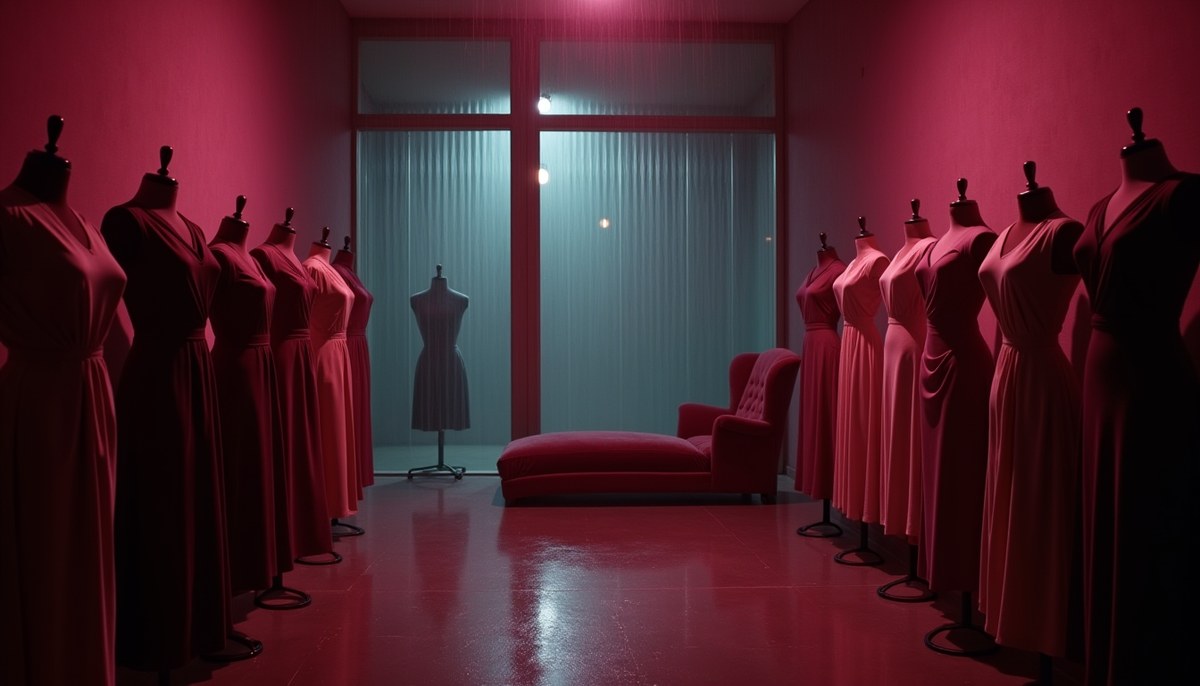
Bava had started as a cinematographer, and his eye is the star here. The fashion house is drenched in saturated reds, magentas, greens and blues, light pouring through coloured glass and bouncing off mannequins and silk. Rooms that should be ordinary, an office, a dressing room, an antique shop, become lurid stage sets. Storms rage outside and neon flickers. Even the quiet scenes look like they are bleeding.
He uses the mannequins brilliantly. The fashion house is full of dress forms and dummies, and Bava keeps us unsure, in the half-light, which figures are people and which are not. The faceless killer fits right in. That blank mask is the perfect giallo villain, a void where a person should be.
Style as Substance
Critics in the 1960s often dismissed films like this as empty pictures with silly plots. That misses what Bava was doing. In Blood and Black Lace, the style is the subject. It is a film about surfaces, about a world of beautiful clothes and beautiful faces where everyone is hiding something rotten. The models are treated as objects by their employers, their lovers and finally the killer, and Bava’s gorgeous compositions make us feel how cold that world is.
It is fair to say the film can be hard to watch in places. The murders are cruel and drawn out, and the women are victims first and characters second. That cruelty is part of the genre’s DNA, and Bava does not soften it. But the craft on display is undeniable, and the film’s influence is everywhere.
A Cast of Suspects
Part of the fun is the ensemble. The fashion house is crowded with suspicious characters: a nervous designer, a drug-addicted aristocrat, a moody antiques dealer, models with secret lovers and secret debts. Bava shuffles them like cards, giving each a motive and a guilty look, and the dubbed dialogue and jazzy score by Carlo Rustichelli add a swinging, slightly unreal 1960s glamour. Cameron Mitchell, a busy American actor who worked often in Europe, gives the film a sturdy centre, while Eva Bartok’s countess carries an air of cool, wounded elegance that keeps you guessing.
The Giallo Blueprint
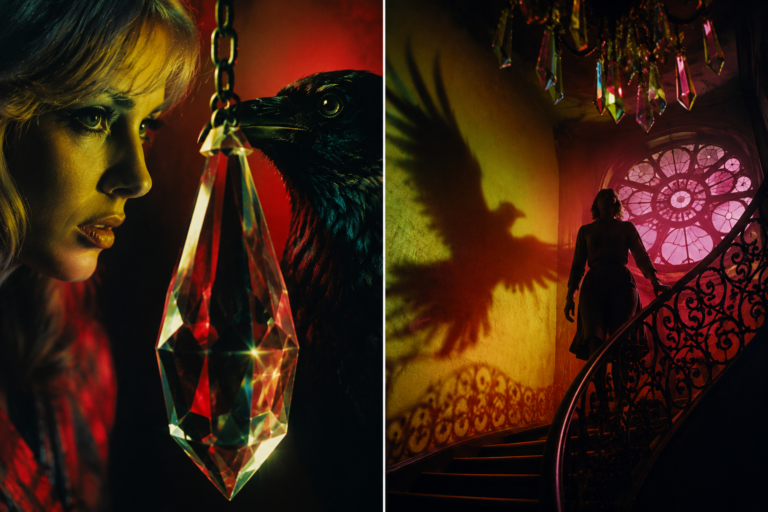
Bava had already made a proto-giallo the year before with The Girl Who Knew Too Much, but Blood and Black Lace is where the formula clicked. Within a few years Dario Argento would take these elements, the gloved killer, the bold colour, the elaborate murder set pieces, and turn them into international hits like The Bird with the Crystal Plumage and Deep Red. Through the giallo, Bava’s ideas flowed into the American slasher film too. The masked killer working through a group of attractive young people, one by one, has a very clear ancestor here.
Filmmakers have never stopped borrowing from it. Look at the colour schemes in Argento’s Suspiria, or any modern film that bathes a stalking sequence in red and blue light, and you are looking at Bava’s palette.
The Verdict
Blood and Black Lace is essential viewing for anyone who loves Italian horror, and an eye-opener for anyone who thinks old films must be grey and static. Watch it on the biggest, best-calibrated screen you can, ideally in a good restoration, because the colour is the point. Then follow the thread forward through Argento and beyond, and you will see just how much of modern horror walked out of that fashion house.
It is the kind of film that lives at the heart of our giallo lane here at Midnight Macabre: style, menace and a palette you could frame. Mario Bava did it first, and arguably did it best.