Night of the Demon (1957): The Curse That Still Comes Out of the Trees
Some horror films scare you with what they show. Night of the Demon scares you with a slip of paper. Jacques Tourneur’s 1957 British chiller, released in the States in a trimmed version as Curse of the Demon, is built around one of the simplest and nastiest ideas in the genre: a cursed parchment, passed to you without your knowing, and a deadline you can’t argue with.
Casting the Runes
The film is loosely drawn from M.R. James’s ghost story “Casting the Runes,” the tale of a scholar who crosses a vindictive occultist and finds himself marked for death. Screenwriter Charles Bennett, a Hitchcock veteran, opened the story up into a brisk investigation. Dana Andrews plays John Holden, an American psychologist who arrives in England to debunk a devil-worship cult just as his colleague dies in a very strange accident. Peggy Cummins is the dead man’s niece, who isn’t ready to call it coincidence.
Karswell, the Gentleman Sorcerer
The heart of the film is Niall MacGinnis as Dr. Julian Karswell, the cult leader. He’s no cackling villain. He throws a Halloween party for the local children on his estate, dotes on his mother, and does magic tricks for the kids, right up until he calls up a windstorm in the middle of the party. MacGinnis plays him as an affable country squire who happens to be in business with something terrible, and who is, by the end, every bit as frightened of it as his victims are. It’s one of the great understated horror performances.
The Demon Tourneur Didn’t Want
Tourneur came out of Val Lewton’s unit at RKO, where Cat People made a virtue of never quite showing the monster. He wanted the same ambiguity here. Producer Hal E. Chester overruled him and inserted a full-sized demon, shown clearly in the opening minutes and again at the climax. For decades critics have called that a mistake, and the argument is fair. But the creature design, with its long claws and smoking, bat-like face, has a woodcut quality that has become iconic. The real trick is that the film works either way. The demon is the payoff; the dread comes from everything around it.
Set Pieces That Still Land
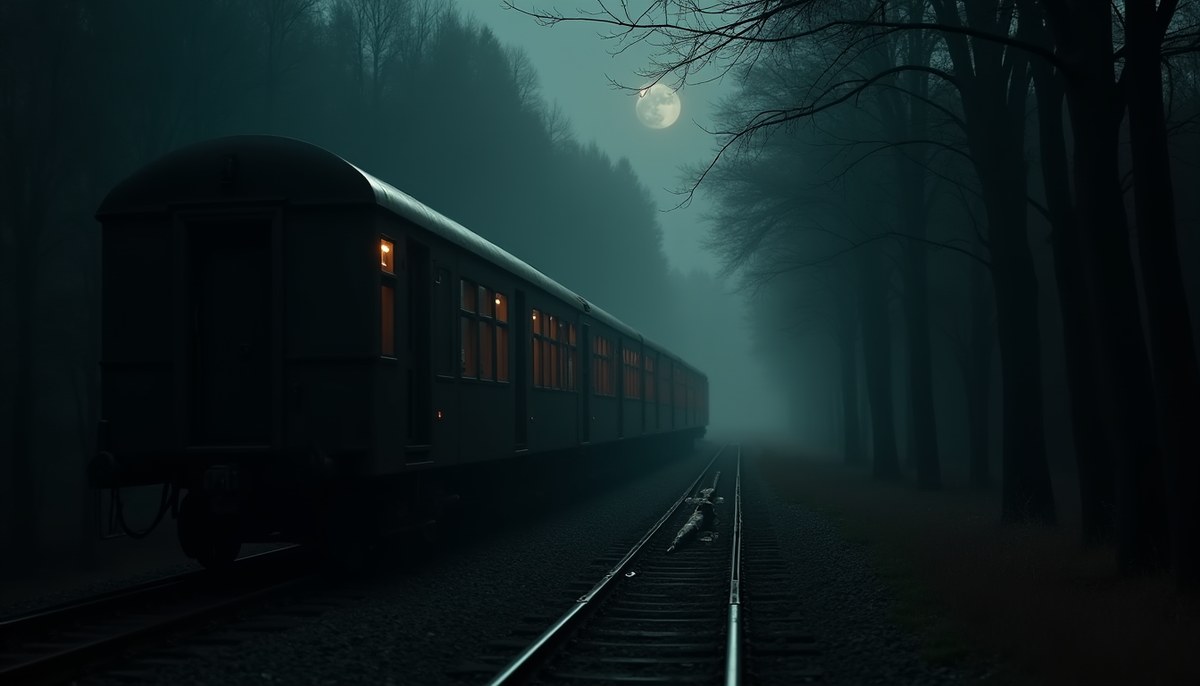
Watch the sequence where Holden walks home through the woods and a glowing, smoking cloud starts gaining on him through the trees. Watch the séance, where a medium’s voice changes mid-sentence. Watch the final train journey, where a piece of parchment becomes the most dangerous object on earth. Tourneur stages all of it with patience, letting the shadows and the sound design do the work. Kate Bush fans will recognize a line of dialogue from this film sampled at the start of “Hounds of Love,” and that line still raises the hair on your arms.
Skeptic Versus Believer
Like a lot of great fifties horror, the film is really a battle over belief. Holden is the rational modern man, sure there’s a scientific explanation for everything, and the film slowly dismantles that certainty one hypnosis session and one strange noise at a time. Andrews plays the stubbornness well, which makes his eventual terror land harder.
Two Cuts, One Curse
The film exists in two main versions. The British release, Night of the Demon, runs longer and gives the story room to breathe, including more of the investigation and the atmosphere around Karswell’s estate. The American release, Curse of the Demon, was trimmed for the double-bill market and loses some of that texture. Most modern home video releases include both, and if you have the choice, start with the longer British cut. The pacing is more deliberate, and the dread builds the way Tourneur intended.
Both versions keep the essential machinery intact: the parchment, the countdown, and the slow, sickening realization that the rules of Karswell’s magic are real and that they apply to everyone. That’s the engine of the story, and no amount of trimming could break it.
The M.R. James Connection
M.R. James, the Cambridge scholar who wrote his ghost stories to read aloud to friends at Christmas, specialized in a particular kind of terror: learned, polite men who poke at something old and find it pokes back. “Casting the Runes” is one of his most famous tales, and the film keeps its best idea, the passing of the curse from hand to hand, while adding the modern skeptic as a foil. Fans of the BBC’s A Ghost Story for Christmas adaptations will recognize the DNA. This is the same tradition, just with a bigger budget and a monster in the woods. If the film hooks you, the original story is short, sharp, and well worth reading on a cold night.
Why It Endures
Night of the Demon sits right at the hinge between the Lewton era and the coming Hammer boom, with a foot in each: classical restraint and a full-blooded monster. It is folk horror before anyone used the term, a ghost story told at a detective story’s pace, and one of the most influential British horror films ever made.
It’s exactly the kind of picture that used to turn up at one in the morning on a UHF channel with a host in a cape to introduce it, which is why we’re so fond of it here at Midnight Macabre. If you’ve never seen it, find it on a dark night. And if anyone hands you a slip of paper afterward, hand it right back.