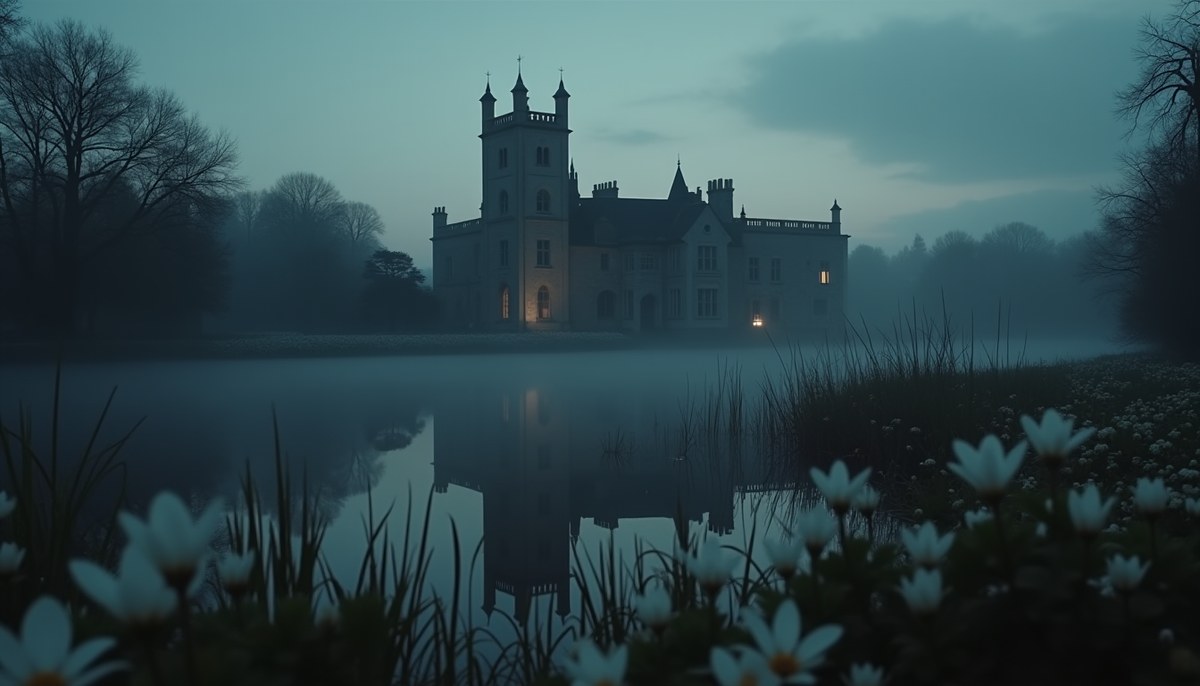
The Innocents (1961): The Most Beautiful Ghost Story Ever Filmed
There are scarier films than The Innocents, and there are bloodier ones. There may not be a more beautiful one. Jack Clayton’s 1961 adaptation of Henry James’s novella The Turn of the Screw is a ghost story made with the care of a great painting, and more than sixty years later it remains one of the finest haunted-house films ever made. It is also a film that never tells you the answer, and that is exactly why it still gets under the skin.
A Governess Arrives
Deborah Kerr plays Miss Giddens, the daughter of a country clergyman, who takes her first job as a governess at Bly, a vast and lovely estate. The children’s uncle, a wealthy and rather careless man in London, wants nothing to do with them, and gives her complete authority on the condition that she never bother him. Her charges are Flora and her brother Miles, two orphans so sweet and well-mannered that they seem almost too good to be true.
Miss Giddens soon learns that her predecessor, Miss Jessel, died at Bly, and that a valet called Quint, who had a cruel and unhealthy influence over the household, is dead too. Then she starts to see them. A man on the tower. A woman standing in the reeds across the lake. Faces at the window. And she becomes convinced that the dead have come back for the children.
Ghosts, or Something Else?
Henry James’s 1898 novella is famous for its ambiguity, and the film honours it brilliantly. Are the ghosts real, and are the children possessed? Or is Miss Giddens, a sheltered and repressed young woman, projecting her own fears and desires onto the house and the children in her care? The film supports both readings, and it never settles the question. Every time you think you know, something tilts the other way.
The screenplay was adapted from William Archibald’s stage version, with Archibald and Truman Capote credited for the script and additional work by John Mortimer. Capote’s influence is felt in the dialogue’s strange, hothouse quality, especially in the eerie, adult way the children sometimes speak.
Deborah Kerr’s Finest Hour
The film rests on Kerr, and she is extraordinary. She makes Miss Giddens warm, nervous, kind and increasingly frightening, and she lets us see her excitement and her terror at the same moment. As her certainty grows, so does our unease, not just about the house but about her.
The children are just as unsettling. Pamela Franklin’s Flora hums to herself and watches things nobody else can see. Martin Stephens, who had already starred in Village of the Damned, plays Miles with a poise that makes his scenes with Kerr genuinely disturbing. Megs Jenkins brings much-needed common sense as Mrs Grose, the housekeeper, and Peter Wyngarde’s Quint barely speaks yet haunts the whole film.
Freddie Francis and the Light
Much of the film’s power comes from its images. It was shot in black-and-white CinemaScope by Freddie Francis, who later directed horror films for Hammer and Amicus, and his work here is breathtaking. He fills the wide frame with deep focus, so that a ghost can stand quietly far in the background while the characters talk in the foreground, and we notice before they do. He darkens the edges of the image so the light seems to glow from the centre. Candles, sunlight and mist all look as if they belong to a dream.
Even the daylight scenes are frightening. One of the most famous apparitions happens on a bright summer afternoon, by a lake, in total silence. The sound design is just as careful: insects, wind, a music box, and the song “O Willow Waly,” which drifts through the film like a curse.
Jack Clayton’s Restraint
Jack Clayton had come to prominence with Room at the Top, a hard-edged social drama, and he approached the ghost story with the same seriousness. He refuses easy shocks. There is almost no gore and very little that would count as a conventional jump scare, yet the film builds an unbearable tension through stillness, framing and silence. Clayton trusts his audience to lean forward and look, and the payoff is a film that frightens more on the second viewing than the first, once you know where to watch the edges of the frame.
The Verdict
The Innocents is a masterpiece of suggestion, a film that understands that the scariest thing is the thing you are not sure you saw. Its influence runs through decades of haunted-house cinema, and modern ghost stories still borrow its figures in the distance and its quiet dread. Watch it on a dark evening with the volume up and your phone in another room.
It is a high point of the British horror tradition we celebrate here at Midnight Macabre: elegant, literary and genuinely chilling. And when it is over, you will want to talk about it, because nobody ever agrees on what really happened at Bly.