Sisters (1972): Brian De Palma’s Split-Screen Nightmare
Brian De Palma made a lot of films before Sisters, mostly scrappy, satirical comedies starring a young Robert De Niro. But Sisters, shot in 1972 and released in 1973, is where he found what would become his signature: Hitchcock’s suspense machinery, pushed into stranger and bloodier territory, with the camera itself as the star.
The Setup
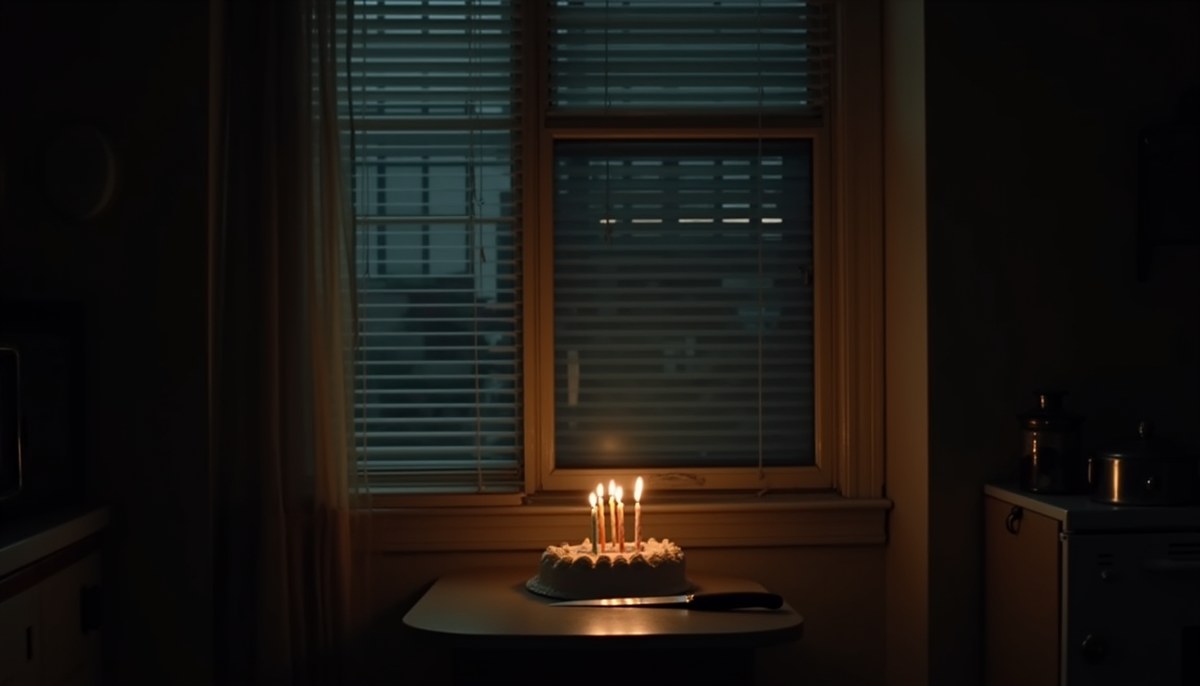
Margot Kidder plays Danielle Breton, a French-Canadian model and actress who meets a man named Philip on the set of a hidden-camera TV game show. They go back to her Staten Island apartment. The next morning, there’s a birthday cake, a knife, and a very bad end for Philip. Across the street, a newspaper reporter named Grace Collier, played by Jennifer Salt, sees the murder through her window. The police don’t believe her. By the time they arrive, the body is gone.
Danielle, it turns out, was separated at birth from a conjoined twin named Dominique. Or was she? De Palma reportedly drew the idea from a magazine article about Soviet conjoined twins, and he turned it into a story about identity, guilt, and what we see versus what we’re told.
The Split Screen
The film’s centrepiece is its split screen. In the moments after the murder, De Palma divides the frame in two: on one side, the killer and her ex-husband Emil, played by William Finley, frantically cleaning up the scene; on the other, Grace and the police making their way to the apartment. We see both at once, with the clock ticking down in real time. It’s both a technical stunt and an ingenious suspense device, and it became a De Palma trademark he’d return to in Carrie, Blow Out and beyond.
Bernard Herrmann
De Palma’s Hitchcock love was never subtle, and here he went straight to the source: Bernard Herrmann, the composer behind Vertigo, North by Northwest and Psycho, scored the film. Herrmann’s music is all shrieking strings and pounding drama, a Psycho descendant that adds enormously to the tension. Herrmann and De Palma worked together again on Obsession, and it’s a pleasure to hear the old master scoring a new generation’s thriller.
Kidder, Salt and the Ensemble
Kidder, a few years before she became Lois Lane in Superman, is excellent in a tricky dual role: charming, vulnerable and genuinely unnerving. Jennifer Salt’s Grace is a wonderfully determined heroine, a reporter whose editor treats her stories as fluff and whose patience with the police wears thin fast. Charles Durning turns up as a dogged private detective, and William Finley, a longtime De Palma collaborator, is memorably creepy as Emil.
The Third Act
The film’s final stretch takes a surreal turn into a private psychiatric clinic, with a black-and-white hallucination sequence that pushes the film into full nightmare. It’s bold, strange and divisive, and very much De Palma: he’s less interested in tidy solutions than in pulling the rug out from under the audience. The final shot, a long, slow pull back over an ordinary landscape, is a perfectly chilling punchline.
The Voyeur’s Eye
Sisters opens with a hidden-camera game show called “Peeping Toms,” in which a contestant has to guess how a man will react when he thinks he’s alone with a blind woman. It’s a sharp, nasty little satire, and it announces the film’s real subject: watching. Grace sees the murder through her window. The audience watches through her eyes and through the killer’s. Television, photography and surveillance run all the way through the story, and De Palma keeps implicating us in the act of looking.
That theme would become central to his career, from the voyeurism of Dressed to Kill and Body Double to the obsessive listening of Blow Out. In Sisters it’s rough around the edges, made on a small budget with an independent crew, but the idea is fully formed. De Palma knows that a suspense film is, at its heart, a machine for making an audience desperate to see something, and then afraid of what it might see. Few directors have played that game with more relish.
Why It Endures
Sisters is a young filmmaker announcing himself. Within a few years De Palma would make Phantom of the Paradise, Carrie, Dressed to Kill and Blow Out, all of which we’ve written about or will. You can see the seeds of every one of them here: the voyeurism, the dark humor, the split screens and the women at the centre of the suspense. It’s also simply a terrific thriller, tight, nasty and surprising.
De Palma is one of our Reels lanes here at Midnight Macabre, and Sisters is where we’d tell anyone to start. Watch the split screen. Then try not to check across the street before bed.